Maryland · Washington, DC · Northern Virginia
Garage Door Panel Replacement
A damaged garage door panel is more than a cosmetic problem. Each section of a sectional door is joined by hinges, carries rollers along the tracks, and adds weight that the spring system has to balance. A dented, cracked, bent, or rusted panel can affect how the whole door moves, seals, and looks.
DMV Garage Door Repairs provides garage door panel inspection and replacement for homeowners across Maryland, Washington, DC, and Northern Virginia. We inspect the damaged section, hinges, rollers, tracks, bottom fixtures, spring system, and door balance before recommending whether a panel replacement is the right repair.
If a vehicle struck the door, a section is bent or cracked, or the door no longer moves smoothly, stop using the opener and keep people away from the opening.
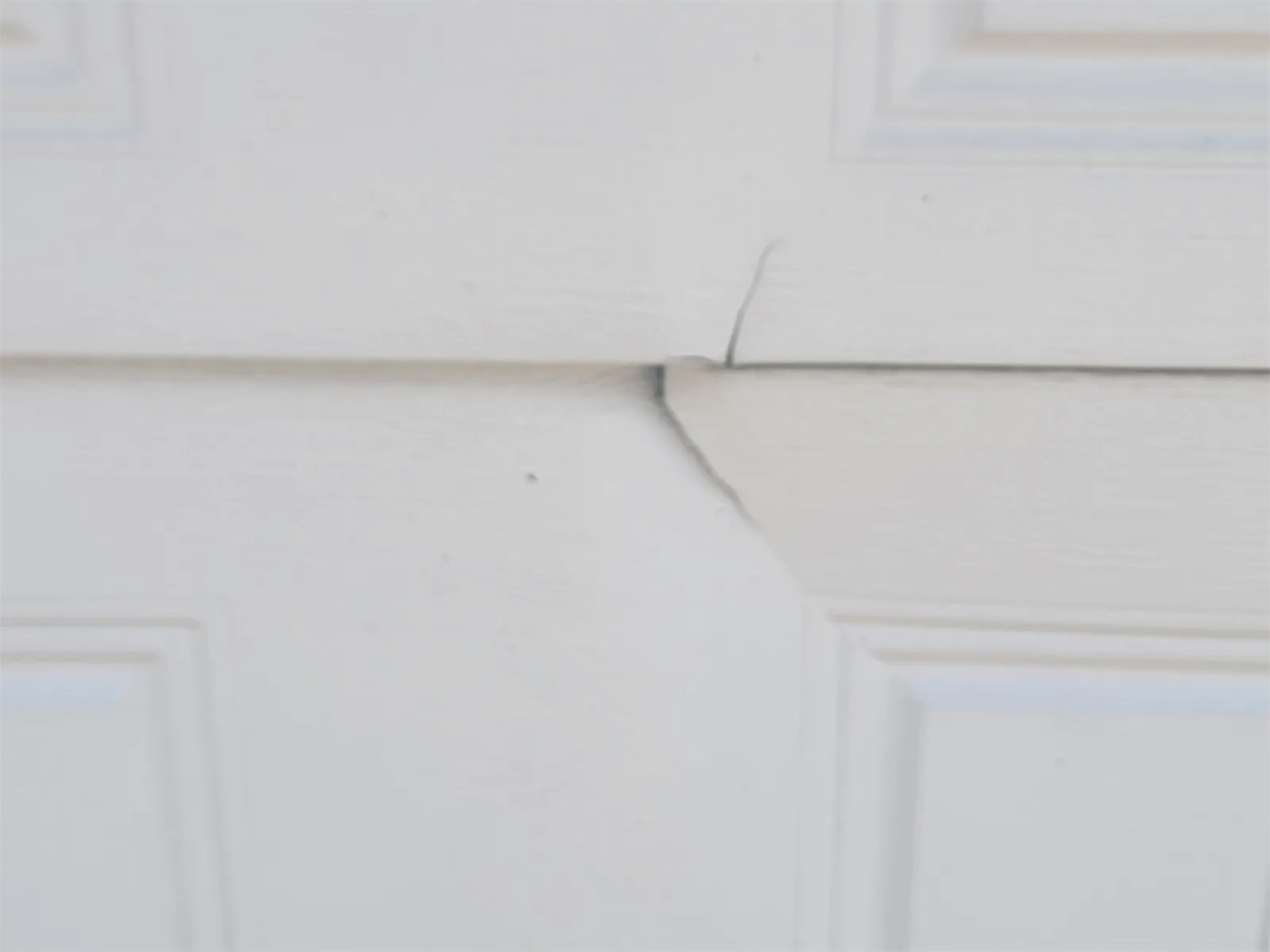
Was the Door Hit or Is a Panel Bent?
Do not keep opening or closing the door.
A bent or cracked section can bind as it passes the curve of the track. The door may twist, pull rollers out of position, strain the hinges, or place uneven force on the springs, cables, and opener.
Keep children, pets, vehicles, and stored items away from the door. Do not try to hammer a dented section flat, remove hinges or brackets, or disconnect an unstable door from the opener.
Call (240) 932-9585 and tell us:
- Whether the door is open, closed, or partly open
- Which section is damaged: top, middle, or bottom
- Whether the panel is dented, cracked, or bent
- Whether the door was struck by a vehicle
- Whether any rollers came out of the track
- Whether the door is hanging crooked
- Whether the opener still runs
- Whether a vehicle is trapped inside
The safest next step depends on the door’s position and how far the damage extends beyond the panel itself.
What Garage Door Panels Actually Do
Most residential garage doors are sectional doors made of several horizontal panels, also called sections, that move together as one unit.
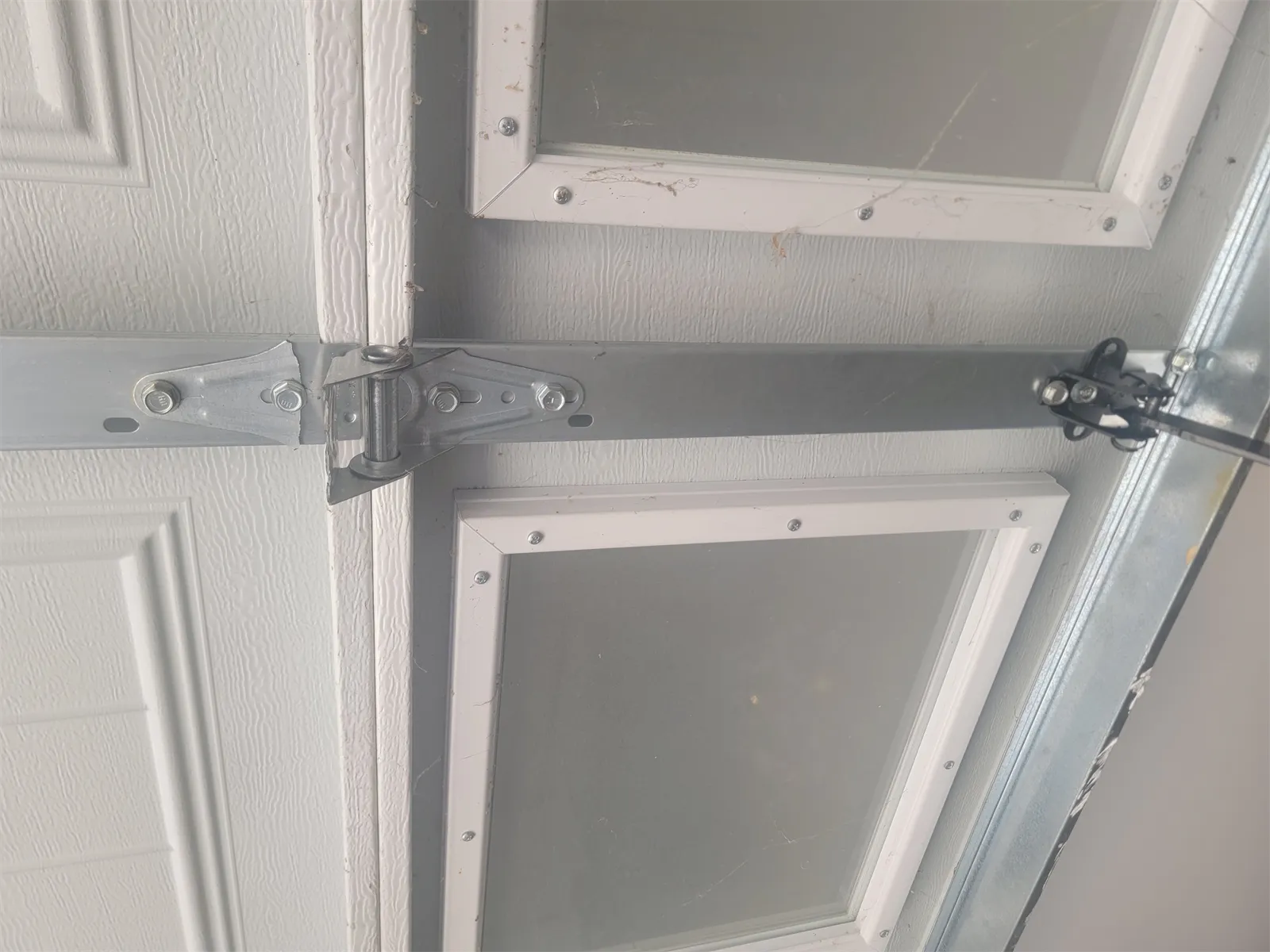
The sections are joined by hinges. Rollers mounted on the hinges and end brackets guide each section along the tracks, so every panel bends around the curve of the track as the door opens and closes.
Panels are made from steel, aluminum, wood, fiberglass, or composite materials. Many are insulated, and some include windows, decorative trim, or reinforcing struts.
Each panel adds weight that the springs are set to balance. The opener moves a balanced door; it does not carry the full weight of the door by itself.
When one section is damaged, the whole door can stop moving smoothly.
Signs You May Need Garage Door Panel Replacement
A Panel Is Dented or Bent
An impact from a vehicle, equipment, or a stored item can bend a section. A deep dent or a bent edge can stop the panel from flexing through the track curve and may cause the door to bind or twist.
A Panel Is Cracked or Split
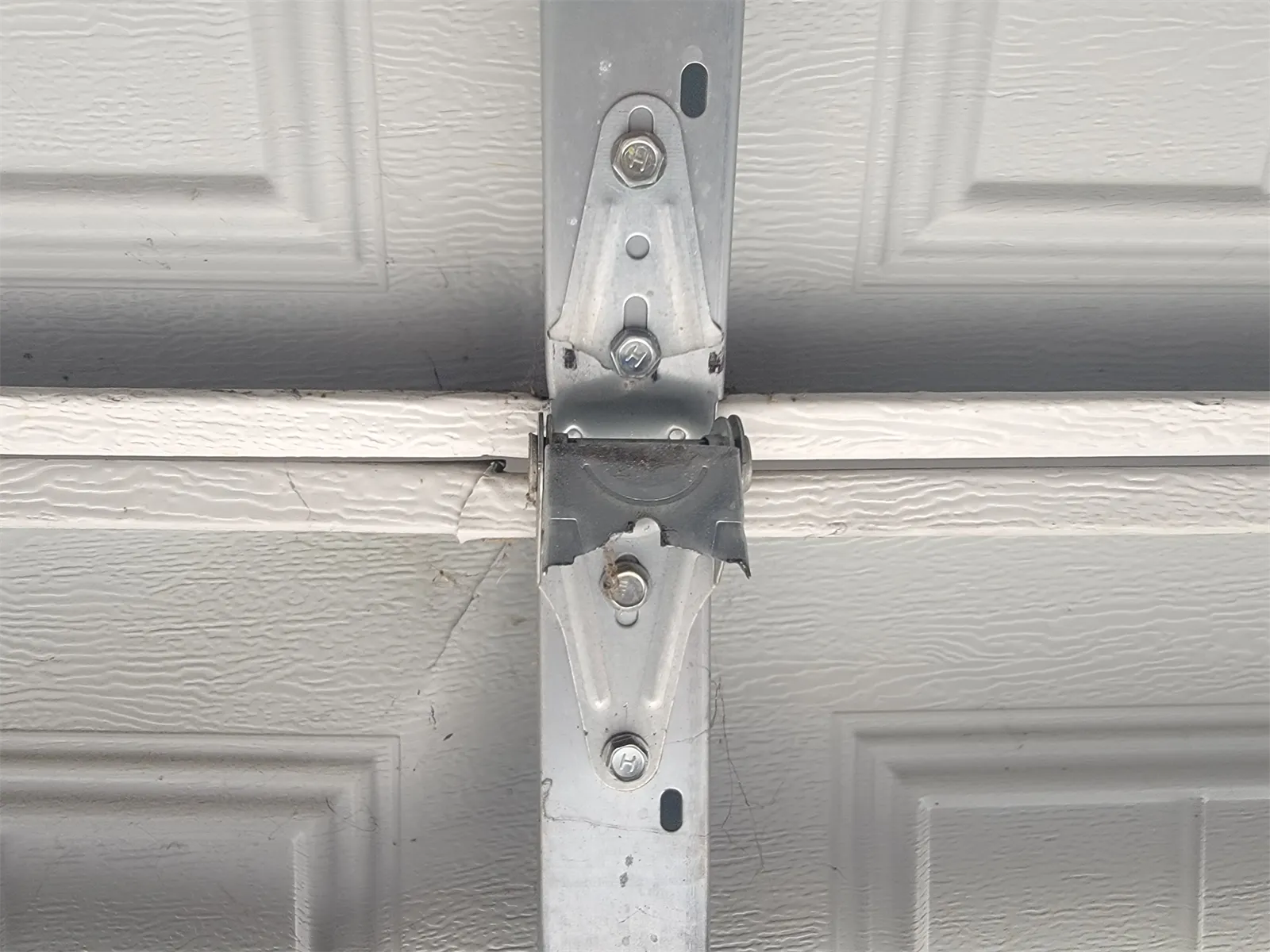
Cracks can appear in steel, fiberglass, composite, or wood panels after an impact, with age, or around hinge and bracket mounting points. A crack near the hardware can weaken the section where it carries load.
The Bottom Section Is Rusted or Rotted
The bottom panel sits closest to water, road salt, and snow. Rust in steel or rot in wood often starts along the bottom edge and can weaken the area where the bottom bracket and lift cable attach.
Hinges or Brackets Have Pulled Loose
When a section is damaged, the hinge or bracket screws can tear out of the panel. A loose hinge lets the sections separate or fold unevenly as the door moves.
Sections Are Separating
Panels can begin to pull apart at the joints after an impact, when the door closes on an obstruction, or when a reinforcing strut is bent. Reattaching hardware to a weakened section without correcting the damage may allow the problem to return.
The Door Will Not Open
A bent section can catch on the tracks, stop the door after it moves a short distance, or make it feel unusually heavy. Do not repeatedly press the opener. The motor may be pulling against a jammed door.
The Door Will Not Close or Seal Evenly
A warped or bent panel can leave gaps along the floor or between sections, letting in water, drafts, pests, or light. The bottom seal may no longer meet the floor evenly.
The Door Shakes, Jerks, or Binds
A damaged section can drag on the tracks or push rollers out of line. Shaking and binding may also involve rollers, tracks, hinges, springs, or cables, which is why a complete inspection matters.
The Opener Runs but the Door Barely Moves
The opener may still make noise even when the door is too heavy or mechanically jammed. Stop using it. Continued operation can damage the operator or pull the door farther out of alignment.
Dented Panel, Cracked Panel, or Bent Section?
These kinds of damage can look similar from the floor, but they do not always need the same repair.
Dented Garage Door Panel
A panel may become dented because:
- A vehicle backed into the door
- The door closed on a vehicle or object
- A ball, bicycle, or piece of equipment struck it
- Hail or storm debris hit the door
- A mower or tools were stored against it
- Someone leaned or pushed on a thin steel skin
- The door was forced open while jammed
- The door was operated after becoming crooked
A shallow surface dent can be cosmetic, but a dent near a hinge, an edge, or a strut should be inspected before the door is used.
Cracked or Split Garage Door Panel
Panels can crack because of impact, age, sun and temperature changes, moisture in wood, stress around hinge and bracket screws, a bent reinforcing strut, or repeated operation of a door that binds.
A crack that runs through the section or around its hardware usually means the panel is replaced, not patched.
Bent or Buckled Section
When a section is bent or buckled, the correct repair may involve more than the panel. The technician should inspect the hinges, rollers, end brackets, tracks, struts, adjoining sections, bottom fixtures, spring balance, and opener attachment.
The door must be returned to balanced, level travel after the section is replaced.
Why a Damaged Garage Door Panel Can Be Dangerous
A garage door is heavy, and its springs and cables are under significant tension.
The bottom section holds the bottom brackets where the lift cables attach. Removing or loosening that hardware without controlling the spring force can allow sudden movement.
A damaged section can also leave the door in an unstable position. The door may appear to be resting in the tracks while a bent panel is binding or carrying uneven load.
Potential risks include:
- The door dropping unexpectedly
- A bent section folding or buckling further
- Rollers leaving the track
- Hinges tearing out of the panel
- The opener pulling against a jammed door
- Sharp metal edges or broken window glass
- Injury to anyone lifting or standing under the door
- Damage to a vehicle or property
This is not a safe DIY repair.
What Not to Do When a Garage Door Panel Is Damaged
Do Not Keep Pressing the Opener
The opener cannot push a bent section through the tracks. Repeated attempts may damage the operator, bend the top section, worsen track problems, or pull the door farther out of alignment.
Do Not Try to Lift the Door Alone
An unbalanced garage door can be extremely heavy. Even if the door moves at first, it may shift, bind, or drop suddenly.
Do Not Pull the Emergency Release on an Unstable Door
Disconnecting the opener may remove the only component currently helping hold the door in position. The safe choice depends on the door’s position and condition.
Do Not Touch the Bottom Bracket
The lift cable is commonly attached at the bottom fixture of the bottom section. That bracket can be connected to spring tension and should not be loosened by an untrained person, even when the bottom panel is the one that is damaged.
Do Not Hammer a Bent Section Straight
Striking or prying a bent panel on an installed door can shift the door, crack the section further, or loosen hinges and brackets. The panel and the hardware around it should be assessed first.
Do Not Remove Hinges or Brackets
Hinges and end brackets hold the sections together and carry the rollers. Removing them from an installed door can let a section drop or the door shift. Keep clear and arrange professional service.
Need immediate help with a damaged garage door panel? If the door is crooked, stuck, or blocking your vehicle, stop operating it. Call (240) 932-9585 and describe the door’s current position. We will help you request the earliest available inspection.
What Causes Garage Door Panel Damage?
Panel damage is often the result of impact, weather, age, or another problem in the door system.
Vehicle Impact
Backing into the door, or pulling in before it has fully opened, is a common cause of bent and cracked sections.
Rust and Corrosion
Moisture, road salt, humidity, and water near the garage floor can corrode steel panels. Rust is often most visible along the bottom edge of the door.
Weather, Hail, and Debris
Hail, wind-blown debris, and storms can dent thin steel or aluminum skins and crack older panels.
Uneven Door Movement
A door that is not level or binds in the tracks places extra stress on the sections and their hinges. The cause may involve the springs, cables, tracks, or rollers.
Loose or Damaged Hinges
A worn or loose hinge lets sections flex unevenly. Over time the screw holes can enlarge and the panel can crack around the hardware.
Broken or Incorrectly Balanced Springs
If the spring is broken, weak, or out of adjustment, the opener and the panels carry force they were not designed to carry, which can bend the top section.
Obstructions Under the Door
If the door closes on an object, the bottom section takes the force. That can bend the bottom panel, damage the bottom fixture, or crack the section.
Bent Tracks or Damaged Rollers
Track or roller problems can make a section drag or twist as it travels. Repeated binding can bend panel edges and loosen hinges.
Age, Moisture, and Sun Exposure
Wood panels can rot or warp, and older steel, fiberglass, and composite panels can fade, crack, or delaminate after years of sun and moisture.
Our Garage Door Panel Replacement Process
1
We Check the Door’s Current Position
Before moving the door, the technician evaluates its position:
- Fully closed
- Partly open
- Fully open
- Crooked
- Off track
- Supported unevenly
- Connected to an operator under strain
2
We Inspect the Damaged Section and Its Neighbors
Even when only one panel looks damaged, the adjoining sections should be inspected. The technician checks for:
- Dents and creases
- Cracks or splits
- Rust or rot
- Bent edges or end stiles
- Torn hinge or bracket mounting points
- Bent reinforcing struts
- Damage to windows or trim
- Gaps between sections
- Damage to the adjoining panels
3
We Inspect the Related Hardware
Panel damage can be caused by or connected to other components. The inspection may include:
- Hinges
- End brackets
- Rollers
- Tracks
- Bottom brackets
- Lift cables
- Springs
- Reinforcing struts
- Weather seals
- Operator attachment
- Door balance and level
4
We Confirm a Matching Panel
A replacement section must match the door’s manufacturer, model, size, style, thickness, insulation, and color. We identify the door and check whether a compatible panel can be sourced. Some older or discontinued doors no longer have matching panels available.
5
We Replace the Damaged Section
The damaged section is removed and the new panel is installed with the correct hinges, brackets, rollers, and fasteners. When the bottom section is replaced, the bottom fixtures and lift cables are handled with the spring tension safely controlled.
6
We Test Door Balance and Travel
After the repair, the door is tested through controlled movement. The technician checks:
- Whether both sides rise together
- Whether the new section flexes smoothly through the track curve
- Whether the door stays level
- Whether the rollers move smoothly
- Whether the door binds in the tracks
- Whether the opener is operating a balanced door
- Whether the door closes and seals evenly
7
We Explain Any Additional Wear
If the technician finds damaged rollers, weak springs, bent tracks, worn hinges, or other concerns, they should be explained clearly. The customer should understand what was repaired, what remains serviceable, and what may need future attention.
Should You Replace One Panel or the Whole Door?
When only one or two sections are damaged and a matching panel is available, replacing the damaged section is often the more practical approach.
Panel replacement keeps the sections that are still in good condition. It can be a good fit when the rest of the door is structurally sound, the tracks and hardware are serviceable, and the replacement panel matches the existing door.
Replacing only the damaged section may help:
- Limit the work to the damaged part of the door
- Keep the existing door style and hardware
- Restore smooth, level travel
- Reduce the time the opening is out of service
However, the correct recommendation depends on the actual door, panel condition, part availability, and reason for the damage.
The technician should inspect both sides and explain the options before the work is approved.
Garage Door Panel Replacement vs. Repairing the Existing Panel
A damaged panel is not automatically reusable.
A repair may be reasonable only when the damage is minor and cosmetic, the section still flexes and seals correctly, and the hardware mounting points are sound.
Replacement is usually the better choice when the panel is:
- Cracked or split
- Deeply dented or creased
- Bent along an edge
- Rusted through
- Rotted or warped
- Torn at a hinge or bracket
- Separating at the joints
- Delaminating
- Binding in the tracks
A damaged panel should not be kept in service simply because the door still moves.
Damaged Panel vs. Off-Track Door
These failures can create similar symptoms, but they are different problems.
Signs of a Damaged Panel
- A section is visibly dented or bent
- A panel is cracked or split
- Hinges are pulling out of the panel
- Gaps appear between sections
- The bottom edge is rusted or rotted
- The door binds at the same point in its travel
Signs of an Off-Track Door
- A roller has left the track
- The door is hanging crooked
- A track is bent or pulled from the wall
- The door stopped and will not move
- A loud bang or scrape came from the track
Why the Difference Matters
Panel damage can also follow a broken torsion spring, when the opener strains to lift a door the springs no longer balance and bends the top section.
Replacing a panel without correcting the cause of the damage will not restore proper operation. The tracks, rollers, springs, and balance should be inspected along with the panel.
Garage Door Panel Types and Material Differences
Garage doors do not all use the same panel construction.
Steel and Aluminum Panels
Steel panels are the most common on modern sectional doors. They may be a single layer or insulated with a back skin. Thin skins dent more easily, and a replacement panel must match the original gauge, embossing, and color.
Wood, Fiberglass, and Composite Panels
Wood panels are vulnerable to rot and warping. Fiberglass and composite panels resist dents but can crack. Each needs a replacement that matches the original material and finish.
Insulated, Windowed, and Specialty Panels
Some doors use insulated sections, window inserts, custom designs, or commercial-grade panels. These may require specific parts, longer lead times, or a different service procedure. The replacement panel must match the actual door.
Can You Open a Garage Door With a Damaged Panel?
Sometimes a trained technician can stabilize and move the door during service, but a homeowner should not assume the door is safe to lift.
The risks depend on:
- Which section is damaged
- Whether the hinges are still attached
- Whether the door is open or closed
- Whether the door is off track
- Whether the springs and cables are intact
- Whether the opener is still connected
- Whether the bent section is binding in the track
Trying to lift the door can cause it to twist, bind, or fall.
If a vehicle is trapped, tell us when you call. Do not attempt to solve the problem by forcing the door.
Can the Garage Door Opener Be Used With a Damaged Panel?
No. Stop using the opener until the door has been inspected and repaired.
The opener is designed to move a balanced door. It is not designed to push a bent or binding section through the tracks.
Continued operation can:
- Damage the opener
- Bend the top door section
- Pull the trolley or arm out of position
- Worsen track damage
- Cause rollers to leave the track
- Make the door more crooked
- Increase the repair scope
When Panel Damage Leads to an Off-Track Garage Door Repair
A bent or damaged section can make one part of the door move differently from the rest.
As the door twists, a roller may leave the track or a track may bend under uneven force.
An off-track condition may therefore involve:
- Panel replacement
- Hinge replacement
- Track realignment
- Roller replacement
- Bracket inspection
- Adjoining section inspection
- Spring and balance testing
The door should not be returned to service until both the visible derailment and the damaged section are corrected.
Damage to the Bottom Section
The bottom section is often the panel that is damaged, and it holds one of the most important safety points on the door.
The lift cables commonly attach to the bottom brackets on this section. Because those brackets can be connected to spring tension, they should never be loosened as a homeowner repair.
Damage to the bottom section may result from a vehicle impact, the door closing on an object, rust near the floor, water exposure, rot in wood doors, or a worn bottom seal.
The bottom brackets, cables, and seal should be inspected whenever the bottom section is replaced.
Repair vs. Full Garage Door Replacement
A damaged panel by itself usually does not mean the entire garage door needs replacement.
Panel replacement may be appropriate when the other sections remain structurally sound, a matching panel is available, the tracks can be aligned, the spring system is serviceable, the bottom fixtures remain secure, and the door can be restored to balanced operation.
A full door replacement may be considered when several sections are bent or cracked, a matching panel is no longer made, a new panel would not match the color or style of the rest of the door, tracks and mounting points are extensively damaged, the door has repeated major failures, or repair cost approaches the value of a safer replacement.
The decision should be based on the condition of the complete door, not on one panel alone.
What Affects Garage Door Panel Replacement Cost?
The cost can vary based on:
- Door size and width
- Panel material
- Insulated or non-insulated section
- Number of damaged sections
- Which section is damaged
- Window inserts or decorative trim
- Color and finish matching
- Availability of a matching panel
- Hinge, bracket, and roller condition
- Track damage
- Spring and cable condition
- Accessibility and working space
- Residential or commercial system
- Parts required
A reliable quote usually requires inspection, because the door model and the extent of the damage decide which parts are needed.
Preventing Future Panel Damage
Garage door panels are built to last, but several steps can help prevent damage or catch it early.
Make Sure the Door Is Fully Open
Wait until the door has stopped at the top before driving in or out. Many bent sections are caused by a vehicle striking a door that was still moving.
Pay Attention to Uneven Movement
A door that rises unevenly, closes with one side first, or leaves a gap under one corner should be inspected.
Watch the Bottom Edge
Check the bottom section for rust, rot, a worn seal, or water collecting at the floor. Early attention can slow damage to the area where the lift cables attach.
Do Not Continue After an Impact
If a vehicle, bicycle, storage item, or other object strikes the door, check for visible changes before using it again.
Schedule Service Before a Minor Problem Becomes an Emergency
Small cracks, loose hinges, gaps between sections, and binding are early warning signs. Addressing them before a section fails may reduce damage and downtime.
Homeowner Panel Safety Checklist
From a Safe Distance, Check Whether:
- The door is level
- All sections line up evenly
- Any panel is dented, bent, or cracked
- Hinges sit tight against the panels
- Rust or rot is present near the bottom edge
- Gaps appear between sections
- A roller is outside the track
- The door closes evenly
- The opener sounds strained
- The door was recently blocked or struck
Stop Using the Door When:
- One side is higher than the other
- A section is bent or buckled
- A panel is cracked through
- The door is off track
- The door will not stay level
- The opener runs without normal movement
- The door drops, jerks, or binds
- A hinge or bottom bracket appears loose
- You are unsure whether the door is stable
Urgent Panel Damage
Is Your Car Trapped Behind a Damaged Garage Door?
Do not lift the door alone and do not keep operating the opener. Call (240) 932-9585 and tell us whether the door is fully closed, partly open, crooked, or off track.
Local Garage Door Panel Replacement Across the DMV Region
DMV Garage Door Repairs serves homeowners across Maryland, Washington, DC, and Northern Virginia.
Panel damage is common in busy garages, tight driveways, and doors exposed to moisture, road salt, storms, and years of sun. The correct repair still depends on the actual door—not only the location.
When requesting service, provide:
- Full address
- Photo of the complete door
- Photo of the damaged panel
- Door brand and model, if known
- Door position
- Whether the door is crooked
- Whether the vehicle is trapped
- Photo of any label on the door’s edge or inside face
- Any recent impact or obstruction
Clear information helps us understand the problem before arrival. See the full areas we serve across the DMV region.
Why Homeowners Choose DMV Garage Door Repairs
A garage door panel replacement should restore more than appearance. It should restore smooth, level travel, a proper seal, balanced operation, and confidence that the related components were inspected.
We Inspect the Complete Door
A damaged panel can be connected to a hinge, roller, track, spring, or balance problem. We inspect the door around the damage before recommending the repair.
We Explain What Caused the Problem
When the cause can be identified, we explain it. That may include vehicle impact, weather, corrosion, rot, loose hinges, track damage, a blocked door, or spring failure.
We Do Not Treat an Unsafe Door Like a Normal Opener Problem
A crooked or unstable door should not be repeatedly operated for testing. Safety and stabilization come before normal use.
We Explain Repair Options Clearly
When several sections are damaged, when a matching panel is not available, or when the door is off track, the customer should understand the difference between replacing a panel and replacing the door.
We Serve Maryland, Washington, DC, and Northern Virginia
Service availability depends on location, technician availability, door type, access, and required parts.
We Avoid Unsupported Claims
We don’t publish claims like “lowest price,” guaranteed arrival times, “24/7 service,” or a specific number of completed repairs unless each claim is accurate and verifiable.
Frequently Asked Questions About Garage Door Panels
Can I Use My Garage Door With a Damaged Panel?
Not until it has been inspected. A bent or cracked section can bind in the tracks and cause the door to become crooked, jammed, or off track.
Can I Open the Door Manually?
Do not attempt to lift an unstable or uneven door. The door may be much heavier than expected and can shift or fall. Tell the technician if a vehicle is trapped inside.
Should I Pull the Emergency Release?
Not when the door is crooked, partly open, off track, or otherwise unstable. Disconnecting the opener may allow unexpected movement.
Can a Dented Panel Be Repaired?
Small, shallow dents are sometimes only cosmetic. A deep dent, crease, crack, or bent edge usually means the section should be replaced, because it weakens the panel and affects how it moves through the tracks.
Can I Replace Just One Panel?
Often, yes. Most sectional doors allow a single section to be replaced when a matching panel for the same manufacturer and model is available.
Will a New Panel Match the Rest of My Door?
A replacement section is chosen to match the door’s model, style, and color, but an older door may have faded, so a new panel can look slightly different. We explain this before the work is approved.
What If My Door’s Panels Are No Longer Made?
If a matching panel is discontinued, the options may include a compatible panel, refinishing the door, or replacing the door. The final recommendation depends on the door and its condition.
Which Panel Is Damaged Most Often?
The bottom section, from vehicle impact, doors closing on objects, and moisture at the floor. It also holds the bottom brackets, so it must be replaced with the spring tension safely controlled.
Can a Cracked Panel Wait?
A cracked panel has already begun to fail. Stop using the door if the crack is near a hinge or bracket, or if the door binds, and schedule an inspection before the damage spreads.
Why Is the Door Crooked?
Common causes include a bent section, a broken cable, a cable off the drum, a damaged roller, a bent track, a spring problem, or impact damage.
Does a New Panel Affect the Door’s Balance?
It can. A new section may weigh a little more or less than the original, so the door’s balance is checked after installation and the springs are adjusted when needed.
How Long Does Panel Replacement Take?
Timing depends on whether a matching panel must be ordered, which section is damaged, and whether other hardware needs repair. Once the correct panel is available, installation can often be completed during a single visit; more extensive damage may require additional parts or work.
Can the Opener Damage a Panel?
It can. An opener that keeps running against a jammed or unbalanced door can bend the top section. The door should be mechanically balanced before normal opener use.
What Is the Metal Bar Across a Panel?
It is usually a reinforcing strut. Struts stiffen wide sections, especially the top section where the opener attaches. A bent strut should be inspected along with the panel.
Can I Replace a Panel Myself?
No. Removing a section means handling hinges and brackets and, on the bottom section, hardware connected to spring tension. Do not loosen or remove them.
Do You Replace Commercial Garage Door Panels?
Commercial panel service may be available depending on the door type, size, location, hardware, and required equipment.
Can Rust Ruin a Garage Door Panel?
Yes. Corrosion can weaken steel panels, especially along the bottom of the door where moisture may collect.
Will Replacing a Panel Fix an Off-Track Door?
Not always. The tracks, rollers, hinges, springs, cables, and door alignment may all need attention.
Can I Order a Panel Based Only on Door Size?
No. Panel selection depends on the manufacturer, model, size, style, thickness, insulation, color, and hardware configuration.
Can You Give an Exact Price Over the Phone?
A reliable price usually requires inspection. Photos can help identify the likely problem, but the final scope depends on the complete system.
Related Garage Door Services
Panel damage often relates to these other repairs. Links activate as each page is published.
A broken spring or counterbalance problem.
A door that came off track.
Damaged or seized rollers.
An opener pulling against an unbalanced door.
A loose, frayed, or broken cable.
Commercial garage door panel service.
Panel Inspection & Replacement
Need Garage Door Panel Replacement?
A dented, cracked, bent, or rusted panel can make the door bind, seal poorly, or become unsafe. Stop operating the door if it is damaged and keep the area clear. For garage door panel inspection and replacement across Maryland, Washington, DC, and Northern Virginia, contact DMV Garage Door Repairs.
Have photos of the damaged panel and the complete door? Include them with your request when possible, along with any brand or model label. Do not stand under the door to take a closer photo.